Tansy, a herb with a rich history in culinary and medicinal use, is now recognized by modern science for its benefits and cautions. While it’s an exciting plant to forage, it’s essential to use it carefully.
Tansy’s Historical Significance
Tansy was a staple in medieval monastery and kitchen gardens across Europe. It was valued for seasoning, preservation, and pest control. Historically, tansy was used to pack meat and bodies to prevent spoilage and repel pests.
Modern Use and Cautions
Today, tansy is found growing wild and can spread easily. Modern medicine advises limited use due to its potentially harmful compounds. Pregnant and breastfeeding women should avoid it, as it has been used historically to induce menstruation.
What is Tansy?
Tansy (Tanacetum vulgare), also known as Common Tansy, is a perennial herb in the Aster family. Native to Europe and Asia, it has become an invasive weed in many parts of North America.

Is Tansy Edible?
Tansy is edible in small amounts for flavoring. It contains thujone, which is toxic in large quantities. Overdose can cause severe health issues. Pregnant and breastfeeding women should avoid it. Some grazing livestock may find it toxic, though most animals avoid it due to its strong odor.
Medicinal Benefits of Tansy
Tansy has been used in herbal medicine for centuries. Ancient Greeks and medieval Europeans used it for various ailments. Native Americans also incorporated tansy into their medicinal practices. Modern research supports its use as a preservative and treatment for intestinal parasites. Studies show it has antibacterial, anti-inflammatory, and antioxidant properties.
Where and When to Find Tansy
Tansy grows in temperate regions and is often found along roadsides, hedgerows, and pastures. It prefers full sun and well-drained soil. The plant’s above-ground parts die back in late fall, but its stems and seed heads may persist through winter. Tansy typically flowers between July and September.
Identifying Tansy
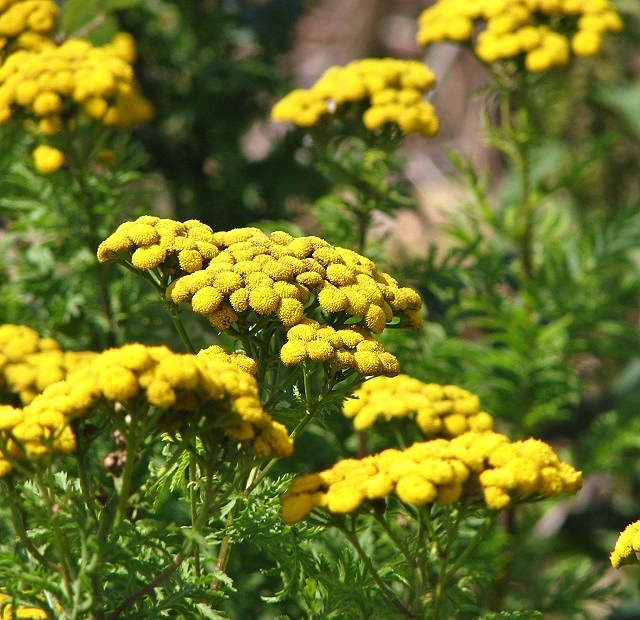
Tansy has fern-like leaves and tall stems with yellow button flowers. It spreads through seeds and rhizomes, forming dense colonies. Its leaves are pinnately compound with saw-toothed edges, and the stems are reddish-brown and can reach up to 6 feet tall. The bright yellow flowers grow in flat-topped clusters.

Tansy Look-Alikes
Tansy can be mistaken for Common Groundsel, St. John’s Wort, or Tansy Ragwort. Each has distinct differences in height, leaf structure, and flower appearance that can help in accurate identification.
Uses for Tansy
Tansy is a versatile herb used for flavoring food and beverages. Historically, it flavored meats, stuffing, cakes, and even alcohol. Due to its toxic compounds, it should be used medicinally with caution. Tansy also serves as a natural dye and pest repellent, making it useful in gardens and as a companion plant.
Final Thoughts on Tansy
Tansy (Tanacetum vulgare) is a fascinating herb with a deep-rooted history in culinary and medicinal traditions. While it offers numerous benefits, including its use as a preservative and natural pest repellent, it should be used with caution due to its toxic compounds. Whether you’re foraging for its vibrant yellow flowers or exploring its applications in the kitchen and garden, tansy remains a versatile and valuable plant. However, it’s essential to respect its potency and historical uses, ensuring it is utilized safely and responsibly.
 Alicia Meek